Technical Support:
158-7527-1139

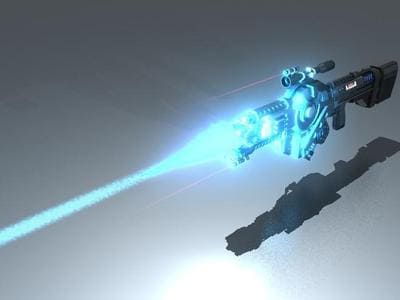
Laser weapons are weapons based on laser technology that use high-energy lasers for precision shooting at long-distance targets or for missile defense. They possess excellent characteristics such as being rapid, sensitive, precise, and resistant to electromagnetic interference. Laser weapons are directional hard-kill weapons that use laser radiation energy beams with wavelengths of 1.06~10.6μm (mainly 2.7μm and 3.8μm) and continuous power of 1~10MW to destroy or disable targets. However, laser weapons also have drawbacks: first, they cannot operate in all-weather conditions; second, they are limited by severe weather and atmospheric fluctuations.
Therefore, protecting against laser weapons has been a research focus in recent years. The following are the types of laser weapon protection technologies:
1. Laser protection based on linear optical principles
This type of laser protection technology is only sensitive to light wavelengths and not to light intensity. It not only blocks the destruction by high-intensity lasers of specific wavelengths but also prevents the absorption of weak light at those wavelengths.
2. Laser protection based on nonlinear optical principles
This type of protection primarily utilizes nonlinear optical effects, including nonlinear absorption, nonlinear refraction, nonlinear scattering, and nonlinear reflection. Its key protection requirements are: first, large third-order nonlinear optical coefficients; second, fast nonlinear response time; third, high laser damage threshold; and fourth, stable physical and chemical properties.
3. Laser protection based on phase change principles
This mainly uses materials like Vanadium Dioxide thin films to absorb energy and undergo a phase change to block the laser. Since the interaction between a laser and a material is primarily a thermal effect, the thermal-induced phase change mechanism of certain materials can be used to achieve protection against high-intensity lasers.
However, achieving these three protective measures requires certain conditions, such as accurate incident angles, high damage thresholds, strong thermal shock protection capabilities for optical materials, and thermal effect response speeds. Therefore, weapon protection based on laser technology must continuously adopt new technologies and materials while balancing detection and protection wavelengths.
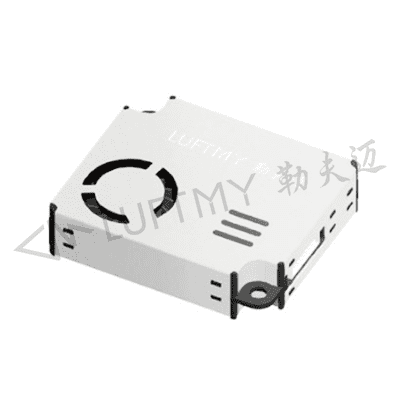
P.S. Luftmy laser PM2.5 sensor application fields: Air purifiers, air conditioners with purification functions, PM2.5 detectors, range hoods, smoke alarms, fresh air systems, specialized PM2.5 sensors, air detectors, wearable devices, etc.