Technical Support:
158-7527-1139

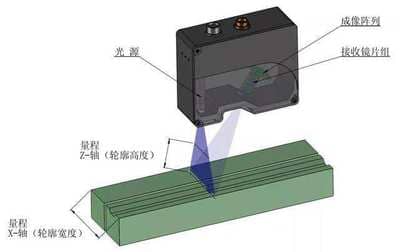
Laser scanning sensors are optical distance sensors utilizing laser technology, typically suitable for protection in hazardous areas, implementing safety through access control. This laser scanning sensor adopts the laser triangulation principle to perform 2D profile scanning on different measured object surfaces. The laser beam is magnified by a set of specific lenses to form a static laser line projected onto the object surface; 3D measurement results are obtained by moving either the object or the laser sensor.
During measurement, a highly sensitive CMOS photosensitive element matrix receives the light beam reflected from the measured object, forming a high-precision profile response. Any change in the profile will alter the shape of the laser line projected onto the object surface, thereby changing the image results on the photosensor matrix.
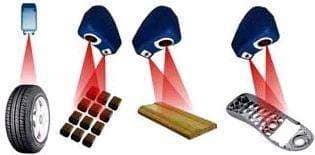
Laser scanning sensors operate in more complex conditions than other laser sensors and may experience signal loss. So, what are the factors affecting accurate scanning? First is the measurement environment factor, second is the setting time factor, and third is the reflective characteristics of the measured object, etc. Successful measurement depends not only on the effective signal of the measured value but also on the environment, the duration of measurement, and the strength of the surface reflectivity or absorption—such as the material of the object itself and profile defects.
Then, how to solve or avoid signal loss? Every independent parameter of the laser scanning sensor profiler must be correctly set and suited to the measured object, along with the use of correct filters, exposure time settings, and so on.
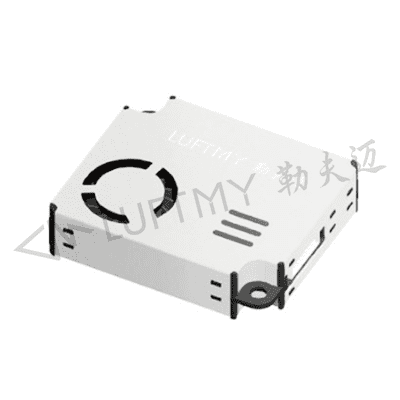
Luftmy laser sensor application fields: Air purifiers, air conditioners with purification functions, PM2.5 detectors, range hoods, smoke alarms, fresh air systems, specialized PM2.5 sensors, air detectors, wearable devices, etc.