Technical Support:
158-7527-1139

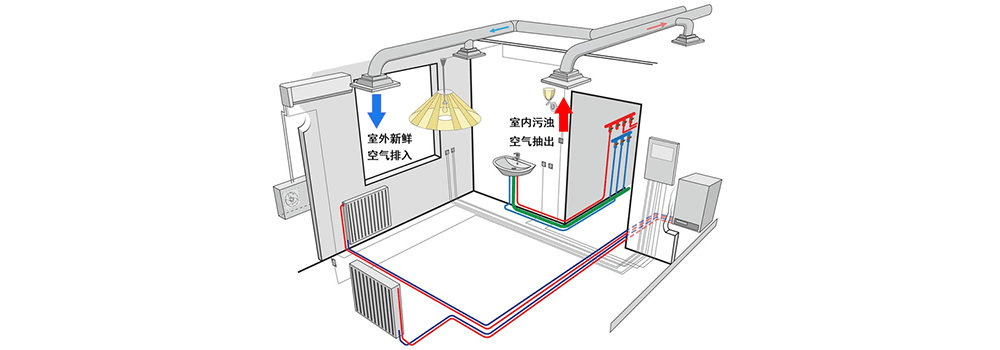
When we discuss indoor air quality, the importance of fresh air systems is self-evident. This system not only provides fresh outdoor air but also monitors and controls indoor CO2 concentration through built-in carbon dioxide (CO2) sensors to ensure air quality.
But how does a CO2 sensor function within a fresh air system? First, we need to understand the basic working principle of CO2 sensors. Modern CO2 sensors primarily detect carbon dioxide concentration through two technologies: Non-Dispersive Infrared (NDIR) sensing technology and chemical sensing technology.
Non-dispersive infrared technology is one of the most popular methods today. It relies on the property of CO2 molecules absorbing infrared light. The sensor contains an infrared light source; as air passes through the sensor, the CO2 molecules absorb specific wavelengths of infrared light. An optical detector in the sensor measures the amount of light passing through the sample chamber and converts this signal into an electrical signal, ultimately reflecting the CO2 concentration level in the environment.
Chemical sensors use a chemical reaction strip to determine CO2 concentration. When air containing CO2 passes through the sensor, the CO2 reacts with the chemicals on the strip, causing a color change. This color change is usually proportional to the concentration of CO2, and the CO2 content can be calculated through color difference analysis.
The application of CO2 sensors in fresh air systems is critical. A fresh air system typically sets a threshold for CO2 concentration; when the sensor detects that indoor CO2 levels exceed the preset value, the system increases the supply of fresh air to dilute the concentration. Conversely, when CO2 levels are below the threshold, the system can reduce the volume of fresh air to save energy without compromising air quality.
Beyond simple on/off control, some advanced fresh air systems can optimize ventilation rates and energy efficiency through algorithms. These systems adjust ventilation in real-time in response to changes in indoor activity and weather conditions, ensuring a comfortable indoor environment while maintaining energy efficiency.
The accuracy and response speed of the sensor itself are vital to the performance of the entire system. High-quality CO2 sensors provide stable monitoring data, ensuring the fresh air system can accurately respond to environmental changes, whereas low-quality sensors may cause delayed responses, failing to maintain indoor air quality effectively.
Combined with continuous technological advancements, future fresh air systems and CO2 sensors are expected to become smarter, such as utilizing IoT technology for remote monitoring, data collection, and analysis to achieve more refined air quality management.
CO2 sensors play an indispensable role in protecting our respiratory health. Understanding their working principles and application in fresh air systems helps us better design and utilize these systems to create cleaner, healthier air for our living and working environments. With further development in technology, indoor air management is believed to become more efficient and intelligent in the future.