Technical Support:
158-7527-1139

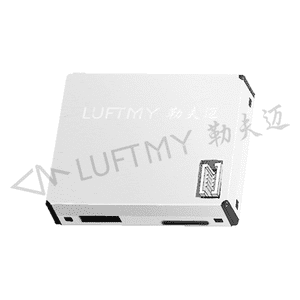
Laser dust sensors focus on collecting and calculating the number of suspended particles of different sizes in the air per unit volume, namely the particulate matter concentration distribution, and then converting it into mass concentration to provide timely and accurate concentration data.
The laser dust sensor developed by Guangzhou Luftmy uses the Mie spherical particle scattering principle; the laser sensor uses laser light to irradiate suspended particles in the air to produce light scattering. The photodetector collects the scattered light intensity within a certain angular range, converts the resulting scattered light intensity linearly into voltage, and then sends it to a data processing system. The data processing system processes the data according to a pre-programmed program based on Mie scattering theory to obtain the equivalent particle size and the number of particles of different sizes per unit volume.
In contrast, other laser sensors can be classified into solid-state laser sensors, gas laser sensors, liquid laser sensors, and semiconductor laser sensors based on the working medium.
1. Solid-state Laser Sensors
These sensors are characterized by small component specifications, robustness, and high output power. Generally, working power can reach over 100W, and pulse peak power can reach 10^9W.
2. Gas Laser Sensors
Gas laser sensors are low-cost, simple in structure, easy to operate, and capable of stable operation for long periods, making them widely used in the market.
3. Liquid Laser Sensors
Dye laser sensors are common in this category, generally using different dyes to obtain different laser wavelengths. The output wavelength of liquid laser sensors is continuously adjustable and covers a wide range.
4. Semiconductor Laser Sensors
Semiconductor laser sensors use semiconductor materials as the working medium. Common semiconductor media include gallium arsenide, chromium sulfide, and zinc sulfide. These sensors are small, lightweight, and have a long lifespan, and optical fiber communication has also greatly promoted the development of semiconductor laser sensors.
The laser dust sensor utilizes the laser Mie spherical scattering principle combined with Luftmy's spatial measurement patent to achieve precise measurement. It features a zero-false alarm rate, long electrical service life, and strong anti-interference performance, suitable for various detectors, air purifiers, fresh air systems, etc.
Laser PM2.5 Dust Sensor Application Fields: Air purifiers, air conditioners with purification functions, PM2.5 detectors, range hoods, smoke alarms, fresh air systems, specialized PM2.5 sensors, air detectors, wearable devices, etc.